
Article
Where Should AI Help First? Start With One Piece of Work.
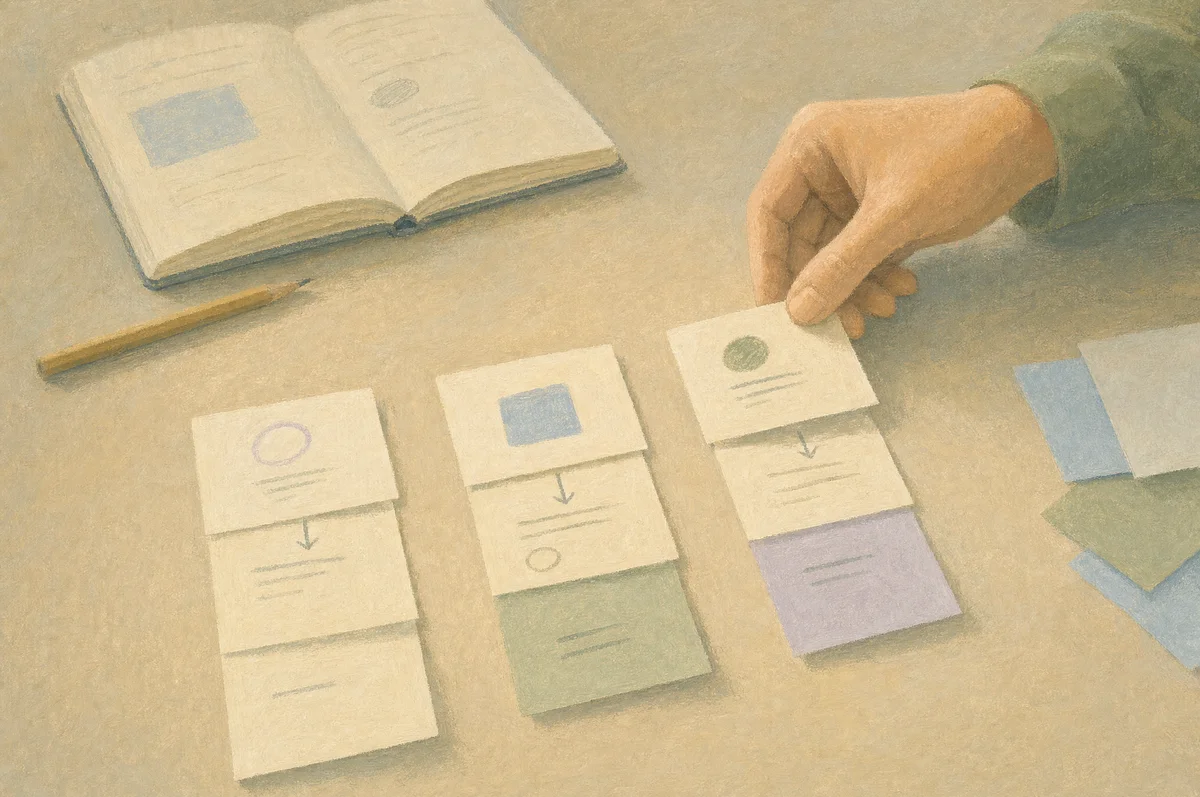
A team member tells you a process takes too long. Then they explain why it's complicated: several systems, multiple handoffs, and decisions that depend on experience.
It's easy to get stuck asking whether AI can handle the whole thing.
Start with one piece of work. Ask someone to walk you through a real example. Look at what they need to gather, check, decide, and pass along. A decision may need their judgment, while gathering the information for that decision takes an hour.
That gives you something specific to explore together: could we make that part easier?
Bring one frustrating example
Set aside 45–60 minutes with someone who does a recurring task and someone who can help make changes happen. If another person supplies essential information or receives the result, include them when their perspective is needed.
Ask participants to bring a recent completed example they can show. An invoice, a change request, or a weekly report gives everyone something concrete to examine.
Start with this question:
“What's one piece of work you do regularly that takes more effort than you think it should?”
Give people room to answer without needing to propose a solution. Knowing where a process becomes frustrating is already a useful contribution.
Record a walkthrough
Have the person show how they handled their example, starting with whatever triggered the task. Record their screen and explanation using an approved tool and information you are permitted to capture. Agree on recording with everyone taking part.
Ask them to explain what they are looking for, why it matters, and what happens when something is missing. Encourage them to describe the awkward parts, including information they copy twice or exceptions they resolve from memory.
Try it: Follow Record a Process Walkthrough. It includes Loom setup instructions, a narration script, transcript steps, and troubleshooting. If you already have a suitable company recording tool, use it with the same script.
For a long process, choose one section for the first recording. Note where it connects to earlier and later steps so you can check that an improvement would not create a problem elsewhere.
Make the steps visible
Copy the transcript into your approved AI assistant and ask it to organize the steps into a table. The guide includes a complete prompt that asks for information sources, handoffs, exceptions, and supporting evidence.
Review the table with the person who demonstrated the task. Correct missing steps before asking for recommendations. A transcript can miss something that happened silently on screen; add a note or permitted screenshot when needed.
Your table might look like this illustrative example:
| Step | What happens? | What makes it difficult? |
|---|---|---|
| Gather records | Open several systems to find timestamps. | Information is scattered. |
| Compare entries | Look for differences between records. | Each comparison happens manually. |
| Resolve an exception | Determine why two entries disagree. | The answer may require experience or a conversation. |
| Record the result | Enter verified information elsewhere. | Details must be copied and checked again. |
Separate the decision from the preparation
A task that requires judgment can involve repetitive preparation.
Deciding whether a difference in recorded hours is justified may require someone who understands the job. Gathering timestamps and arranging them for comparison is a different piece of work.
Ask:
“If the information were already gathered and organized, what would you still need to decide?”
The answer helps identify where the employee's experience matters and where assistance could be useful. It gives you a more precise question than whether AI can handle the entire process.
Describe what easier would look like
Before discussing tools, finish this sentence together:
“Instead of spending time ___, I'd like to be able to ___.”
For example:
Instead of opening three systems and copying timestamps into notes, I'd like to review one comparison that shows the source records and highlights differences. I'd still decide how to handle exceptions.
Use this description to explore possibilities with AI:
We have reviewed the process map below with the person who performs
the task. Help us explore one small improvement.

Our desired change: [Insert the sentence above.]
Process map: [Paste the reviewed table.]
Constraints and decisions that remain with people: [List them.]

Ask up to three clarifying questions before suggesting approaches.
Consider simplifying the process, features in our existing software,
conventional automation, and AI assistance. Do not assume that we have
API access or that any product supports an unverified capability.

For each approach, explain what needs checking, who would need to help,
and how we could test it with completed or sample cases. Include the
effort to review results and maintain the solution. Do not take actions
in our business systems.
Have an appropriate colleague or technical partner check the feasibility of any suggestion. You may find an existing feature, a small tool you can build with AI, or an opportunity for an integrated agent.
Choose a small test and make time for it
Choose one candidate whose benefit is understandable, whose scope is manageable, and whose owner has time to participate. Consider time spent setting up, checking, and maintaining it alongside any software cost.
Use the walkthrough worksheet and test plan to record the proposed change, sample cases, review criteria, owner, and review date.
Start with completed or sample cases when possible so you can compare the output with something already checked. Include an exception as well as a straightforward example. Decide what a useful result would look like and what errors would be unacceptable.
Count the time spent reviewing and correcting the output. A fast first attempt provides little benefit if checking it creates more effort than it removes. Distinguish hands-on time from time spent waiting; shortening one does not automatically shorten the other.
The leader's role is to make time available, resolve access and ownership questions, and help the team decide what happens next. Keep an unsuccessful test useful by recording what it taught you and whether to revise the approach or stop.
Your first session can end with a defined problem, a small test, and people who understand their next step. That is how “we can change this” starts becoming something a team knows how to act on.